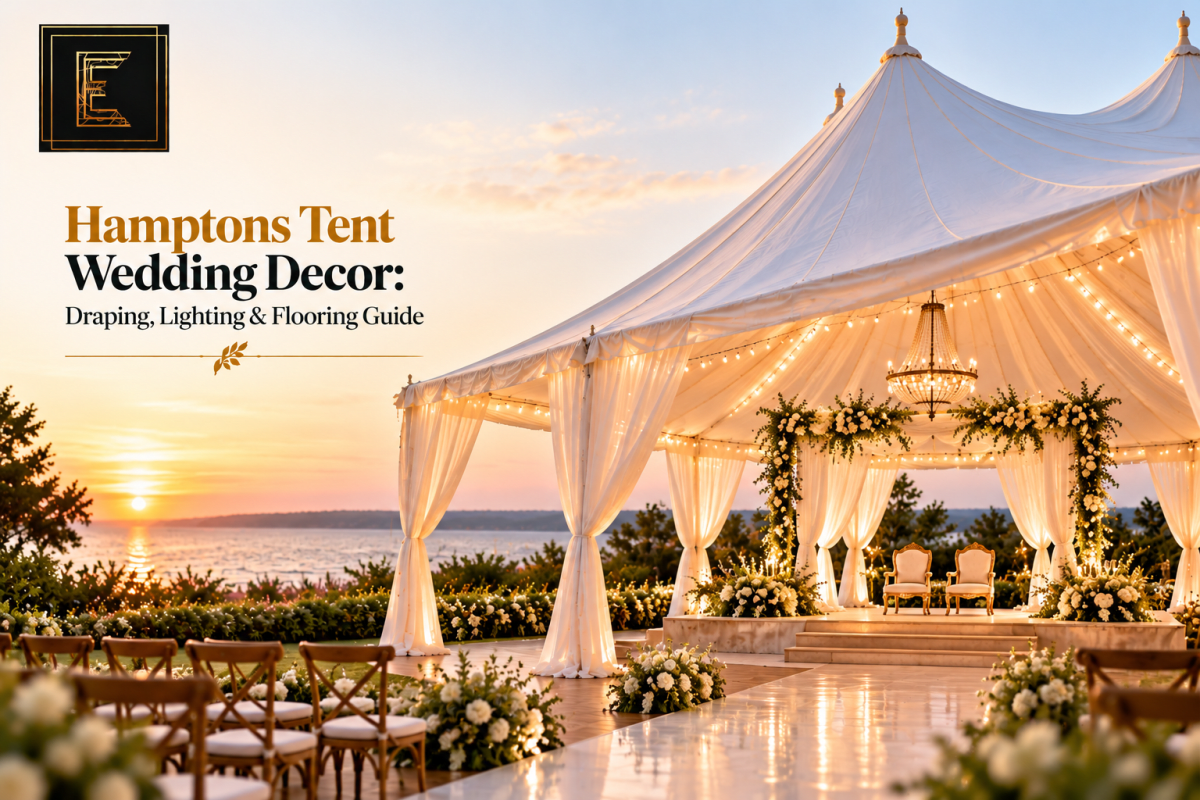
A Hamptons tent wedding combines coastal elegance with the relaxed charm of an outdoor celebration. From sailcloth tents set against ocean views to beautifully styled receptions on private estates, the right decor can transform an open space into a sophisticated wedding venue. However, creating a polished atmosphere requires more than choosing attractive flowers and elegant table settings. Every detail, including tent draping, lighting, flooring, and weather planning, plays an important role in the overall experience.
Thoughtful tent wedding decor helps create a cohesive design while improving guest comfort and making the space feel inviting. Whether you are planning an intimate garden ceremony or a large estate wedding, understanding these essential elements will help you design a beautiful and functional celebration.
Why Tents Need More Decor Than Ballrooms
Unlike traditional ballrooms, wedding tents usually begin as open, relatively blank spaces. They may offer beautiful natural surroundings, but they do not automatically include finished ceilings, decorative walls, permanent flooring, or built-in lighting. These features must be incorporated into the design to create a complete wedding environment.
This flexibility is one of the biggest advantages of a Hamptons tent wedding. You can customize the layout, color palette, lighting, and decorative elements to match your vision. However, each design choice should work with the tent's structure and the surrounding landscape.
Consider the following elements when planning your tent wedding decor:
- Ceiling and draping: Fabric treatments can soften the tent structure, conceal support elements, and introduce an elegant visual layer.
- Flooring: A suitable floor creates a stable surface for dining, dancing, and walking in formal footwear.
- Lighting: Layered illumination creates atmosphere while ensuring guests can move around comfortably after sunset.
- Furniture and layout: Tables, chairs, bars, and lounge areas should fit comfortably within the available space.
- Natural surroundings: Coastal views, gardens, mature trees, and estate architecture can become part of the overall design.
The goal is to make the tent feel intentional rather than temporary. By coordinating these elements, you can create a reception space that feels as thoughtfully designed as an indoor venue while preserving the beauty of an outdoor celebration.
Tent Liners and Ceiling Treatments

The ceiling is one of the most noticeable features of a wedding tent. An untreated structure may feel simple or industrial, while carefully selected fabric treatments can introduce softness, depth, and sophistication. The right approach depends on the tent style, ceiling height, budget, and overall wedding aesthetic.
Choosing the Right Tent Liner
A tent liner is fabric installed inside a tent to cover portions of the structural framework. It can create a smoother, more finished appearance and help establish a cohesive design throughout the reception space.
For a classic Hamptons tent wedding, white, ivory, and soft neutral liners are popular choices because they complement coastal landscapes and understated luxury. These shades also work well with natural wood furniture, white florals, greenery, and elegant table settings.
When selecting a liner, consider:
- Fabric quality: Choose materials that create the desired appearance without feeling visually heavy.
- Tent proportions: High ceilings may accommodate dramatic fabric treatments, while smaller tents often benefit from simpler designs.
- Color coordination: Match the liner to the wedding palette, floral arrangements, furniture, and table linens.
- Installation requirements: Confirm that the fabric system is compatible with the tent structure and approved by the rental provider.
Tent liners can also help create a more unified backdrop for photographs. However, they should be selected with ventilation, temperature, and manufacturer requirements in mind.
Perimeter Draping and Ceiling Details
Perimeter draping focuses on the tent's sides rather than covering the entire ceiling. This approach softens the boundaries of the space while allowing guests to enjoy views of the surrounding property.
For an estate wedding, flowing white drapes can frame garden entrances, conceal service areas, and create an elegant transition between indoor-style reception spaces and the outdoors. If the setting includes beautiful landscaping, keeping some sides open can preserve the natural scenery.
Ceiling treatments can range from simple fabric panels to more elaborate gathered drapes. A restrained design often works especially well for the Hamptons aesthetic, where natural textures, balanced proportions, and understated elegance are central to the look.
Before installation, confirm that all draping is securely fitted and complies with applicable fire-safety requirements. Fabric placement should also avoid obstructing exits, ventilation, or essential equipment.
Flooring Options
Flooring is an essential part of successful tent wedding decor because it affects both appearance and practicality. A beautiful tent can still feel unfinished if the ground is uneven, muddy, or difficult to walk across.
Outdoor wedding locations vary considerably. A manicured lawn may be suitable for a small reception in dry weather, while a larger celebration with dining tables, a dance floor, and substantial guest traffic may require a more structured flooring solution.
Natural Ground and Grass
Grass can be an attractive option for relaxed garden weddings. It preserves the natural character of the setting and works well with floral installations, wooden furniture, and a soft coastal color palette.
However, grass is not always practical for formal celebrations. Uneven ground, moisture, and rain can create challenges for guests wearing heels or formal footwear. It may also become slippery or damaged in high-traffic areas.
If you plan to use natural ground, inspect the site in advance and consider pathways between the ceremony area, reception tent, restrooms, and parking.
Temporary Subflooring
A subfloor is a temporary structural layer installed beneath the finished flooring or designated event surface. Depending on the system, it can help create a more level and stable foundation over uneven outdoor terrain.
For larger Hamptons tent weddings, a subfloor may be particularly useful when the site has slopes, soft ground, or a high likelihood of moisture. It can also support a more consistent surface for tables, chairs, and other event furnishings.
Discuss the following with your tent and flooring provider:
- Site preparation and ground conditions.
- Drainage requirements and protection against moisture.
- Accessibility for guests with mobility needs.
- Installation and removal schedules.
- Compatibility with the tent structure and planned flooring system.
A subfloor can increase rental and installation costs, but it may be worthwhile when reliable footing and guest comfort are priorities.
Dance Floors and Decorative Finishes

A dedicated dance floor gives the reception a clear focal point and helps define the entertainment area. Options include classic white finishes, natural wood tones, and custom designs that complement the wedding palette.
The dance floor should be proportionate to the guest count and expected level of activity. It should also be positioned with consideration for the band or DJ, dining tables, and guest circulation.
For a cohesive look, coordinate the dance floor with the tent's lighting, ceiling treatments, and furniture. Ensure the finished surface is stable, appropriately installed, and suitable for dancing.
Lighting a Tent
Lighting is one of the most effective ways to transform a tent after sunset. During the day, natural light may provide much of the atmosphere. As evening approaches, carefully layered tent wedding lighting creates warmth, improves visibility, and highlights the most important design elements.
Rather than relying on a single lighting source, combine ambient, decorative, and functional lighting to create a balanced result.
String Lights and Bistro Lighting
String lights are a popular choice for outdoor receptions because they create a warm, inviting atmosphere. Suspended across the tent ceiling or arranged in orderly rows, they can complement the relaxed elegance of a Hamptons celebration.
Warm-white bulbs generally work well with white draping, natural wood, and soft floral arrangements. Their placement should be planned around the tent's structure so the lights appear intentional rather than randomly distributed.
Always use equipment rated for the intended outdoor conditions and have a qualified professional confirm safe installation and electrical connections.
Chandeliers and Statement Lighting
Chandeliers can introduce a more formal look, particularly when paired with a tent liner or flowing ceiling drapes. They are well suited to elegant estate receptions where the design calls for a refined, ballroom-inspired atmosphere.
Statement fixtures should be selected according to the tent's dimensions and structural capacity. Confirm load limits, mounting requirements, clearance, and installation responsibilities with the tent rental company and lighting professional.
For a balanced result, use statement lighting in key areas rather than overcrowding the ceiling with decorative fixtures.
Uplighting and Accent Lighting
Uplighting directs light upward from the floor toward tent poles, drapes, or selected architectural features. It can add depth to the space and subtly reinforce the wedding's color palette.
Soft white or warm amber lighting often complements a classic coastal design. More colorful lighting may suit a contemporary celebration, provided it does not compete with the florals or table settings.
Accent lighting can also highlight floral installations, signage, bars, and entrance features. Keep the overall effect consistent so each area feels connected to the rest of the reception.
Practical Lighting for Guest Comfort
Decorative lighting should never come at the expense of visibility. Guests need adequate illumination around entrances, dining areas, walkways, restrooms, and steps.
Plan functional lighting alongside decorative fixtures, and coordinate power requirements with the event team. A lighting professional can help determine equipment needs, cable routing, backup power arrangements, and safe placement.
A well-designed lighting plan should feel atmospheric while remaining practical throughout the evening.
Weather Backup Planning
Weather planning is essential for any outdoor wedding, especially in coastal locations where conditions can change. Even a carefully designed Hamptons tent wedding needs a realistic plan for rain, wind, temperature changes, and damp ground.
A tent offers shelter, but it does not automatically make an event safe or comfortable in every weather condition. The structure, installation, flooring, sidewalls, and electrical equipment must all be appropriate for the expected conditions.
Prepare for Rain and Wind
Discuss local weather patterns and site conditions with your planner and tent rental provider before finalizing the layout. Depending on the forecast and venue, useful preparations may include:
- Installing appropriate sidewalls to provide protection from wind-driven rain.
- Using suitable flooring or subflooring to reduce problems caused by wet or uneven ground.
- Planning covered routes between the tent and essential facilities.
- Protecting electrical connections and lighting equipment from moisture.
- Keeping a clear route for emergency access and evacuation.
Sidewalls may improve weather protection, but they should not be treated as a substitute for appropriate structural engineering or safe operating conditions. Follow the tent provider's guidance and any venue-specific requirements.
Create a Clear Backup Plan
A practical weather backup plan should identify who makes decisions, when those decisions are made, and what happens if the tent cannot be used safely.
Ask your planner and venue to establish a decision timeline, identify an alternative indoor space where possible, and explain how vendors will adapt if conditions change. If an indoor alternative is unavailable, discuss whether the event can be relocated, rescheduled, or otherwise adjusted under the venue's policies.
For coastal and estate weddings, also consider cooler evenings, humidity, and changes in ground conditions. Fans, heaters, or other climate-control equipment may be appropriate in some circumstances, but only when compatible with the tent structure and permitted by the rental provider.
Budget Considerations
The cost of tent wedding decor depends on the tent size, site conditions, guest count, design complexity, rental availability, and level of customization. A simple tent with restrained lighting and natural ground will generally require a different investment from a fully lined structure with engineered flooring, chandeliers, and extensive floral installations.
Rather than focusing only on decorative details, develop a budget that covers both the visual design and the infrastructure needed to support the event.
Prioritize the Essential Elements
Start by identifying the features that will have the greatest impact on guest comfort and the overall appearance.
- Tent rental and installation: Consider tent dimensions, structural requirements, and the installation team's responsibilities.
- Flooring and subflooring: Assess whether the site needs leveling, additional support, or a dedicated dance floor.
- Draping and liners: Compare the cost of full ceiling treatments with simpler perimeter draping.
- Lighting and power: Include decorative fixtures, functional lighting, professional installation, and any necessary power arrangements.
- Weather protection: Budget for appropriate sidewalls, covered pathways, and contingency requirements.
- Furniture and decor: Coordinate tables, chairs, lounge areas, linens, and decorative accents with the overall design.
Request itemized quotations from vendors so you can compare what is included. Delivery, labor, installation, removal, and equipment requirements can significantly affect the final amount.
Where to Save Without Compromising the Design
You do not need elaborate decor in every corner to create an elegant reception. A few well-chosen elements can have a greater impact than numerous competing details.
Consider using perimeter draping instead of a full tent liner, concentrating statement lighting above the dining area, or choosing simple linens that complement the natural surroundings. Seasonal flowers, understated centerpieces, and carefully arranged furniture can also help maintain a polished look.
However, avoid cutting costs on structural safety, appropriate flooring, electrical installation, or necessary weather protection. These elements directly affect the reliability and comfort of the event.
A well-planned budget balances visual impact with practical requirements, ensuring that the finished tent looks beautiful and functions effectively.
Conclusion
Creating beautiful tent wedding decor for a Hamptons celebration requires a balance of aesthetics, functionality, and preparation. From elegant tent liners and perimeter draping to carefully selected flooring and layered lighting, every detail contributes to the atmosphere of the reception.
The most successful designs work with the natural surroundings rather than competing with them. A sailcloth tent, soft neutral fabrics, warm lighting, and thoughtfully arranged furniture can create an inviting setting that feels refined without being overly elaborate.
Equally important are practical decisions about subflooring, electrical safety, weather protection, and budget allocation. By addressing these requirements early and coordinating with experienced wedding professionals, couples can create a cohesive space that supports both the celebration and the comfort of their guests.
Whether you envision an intimate garden gathering or a grand estate wedding, a considered approach to tent wedding decor can help bring your vision to life while making the most of the Hamptons setting.
FAQs
1. What is the best tent style for a Hamptons wedding?
Sailcloth tents are a popular option for Hamptons weddings because their translucent fabric, graceful peaks, and natural appearance complement coastal and estate settings. Other tent styles can also work well, depending on the venue, guest count, weather requirements, and design preferences.
2. Is tent draping necessary for an outdoor wedding?
Tent draping is not essential, but it can make a significant difference to the overall appearance. Ceiling liners create a more finished look, while perimeter draping softens the sides and frames the surrounding landscape. The best choice depends on your budget, tent structure, and desired aesthetic.
3. What flooring works best for a tent wedding?
The best flooring depends on the ground conditions and event requirements. Grass can suit smaller garden celebrations, while temporary flooring or a subfloor may be more practical for uneven or damp sites. A dedicated dance floor is recommended when dancing is part of the reception.
4. How can I make a wedding tent look elegant at night?
Combine warm string lights, carefully positioned chandeliers or pendant fixtures, subtle uplighting, and functional pathway illumination. Coordinate the lighting with the tent draping, table settings, and floral arrangements to create a cohesive atmosphere.
5. How do I prepare a wedding tent for rain?
Work with your tent rental provider and planner to assess the site, select appropriate sidewalls, evaluate flooring and drainage, and protect electrical equipment. Establish a clear contingency plan and confirm the conditions under which the tent must be evacuated or taken out of use.
6. When should I book tent wedding decor vendors?
Book your tent rental company, planner, and major production vendors as early as practical, particularly for popular wedding dates and sought-after Hamptons venues. Booking well in advance gives you more time to coordinate the tent layout, lighting, flooring, installation schedule, and weather contingency arrangements.
7. How can I manage the cost of tent wedding decor?
Begin with an itemized budget covering the tent, installation, flooring, lighting, draping, furniture, and weather protection. Prioritize essential infrastructure, then allocate the remaining budget to the decorative elements that will have the greatest visual impact.
8. What should I consider when planning a tent wedding on an estate?
Review the property's ground conditions, access routes, power availability, drainage, landscaping, and venue restrictions. Confirm installation requirements and protect sensitive areas of the grounds. The tent design should complement the estate's architecture and natural features while providing a practical layout for guests and vendors.